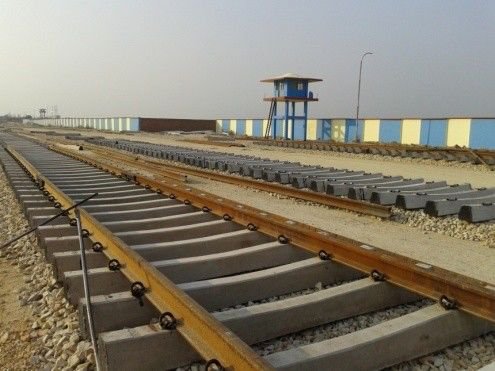
To realize the coal transportation backbone for the 1320 MW (2 × 660 MW) Meja Thermal Power Plant in Uttar Pradesh, a Joint Venture Company—Meja Urja Nigam Pvt. Ltd. (MUNPL) was constituted by NTPC and UPRVUNL in equal partnership. Recognizing the unrivalled expertise of RITES in railway and transport infrastructure, MUNPL entrusted it with the end-to-end responsibility for conceiving, designing, and executing the dedicated coal siding project on the Indian Railways network.
The scope conferred upon RITES was both comprehensive and multi-dimensional: preparation of the Detailed Project Report (DPR) and Engineering Services Plan (ESP), detailed engineering of track and structures, procurement assistance, tender packaging, bid finalisation, contract awards, and complete Project Management Consultancy (PMC) for construction. The Regional Project Office of RITES at Lucknow helmed this undertaking, with all designs—structural and systemic—executed indigenously by RITES’ in-house specialists.
Field execution commenced in November 2013, beginning with the formation and bridge works package within the thermal plant premises. Over time, the project expanded into a formidable programme of railway infrastructure—spanning earthworks, bridges, embankments, track layouts, signalling and telecommunication provisions, and electrification interfaces—culminating in one of the most sophisticated coal logistics systems in the region.
A landmark milestone was achieved in December 2018, when the first loaded coal rake movement into the plant was commissioned, signifying the operationalisation of a project of immense strategic importance. The works, estimated at a sanctioned cost of ₹853 crore, are today nearing full completion, with all major structures constructed and final stages of siding closure underway.
This project not only exemplifies the engineering acumen and managerial prowess of RITES, but also underscores its ability to integrate multidisciplinary expertise—civil, structural, geotechnical, and railway operations—into a seamless whole. By bridging the interface between Indian Railways, DFC, statutory bodies, and the client utility, the Meja siding stands as a model of complex infrastructural delivery, ensuring uninterrupted fuel supply to a thermal powerhouse of national significance.
Role of RITES
RITES assumed the mantle of Project Manager, orchestrating the enterprise with comprehensive authority. Its remit extended from the meticulous packaging of works and the preparation, issuance, and adjudication of tenders, to the award and administration of contracts. Beyond these transactional duties, RITES exercised vigilant supervision over execution, safeguarding the highest standards of quality, cost discipline, and contractual probity. The organization further undertook the full spectrum of construction project management functions—ranging from stringent oversight of progress and compliance to the delicate task of securing statutory sanctions and Railway approvals—thus ensuring the seamless consummation of a project of considerable magnitude and complexity.
Role in Construction Project Management
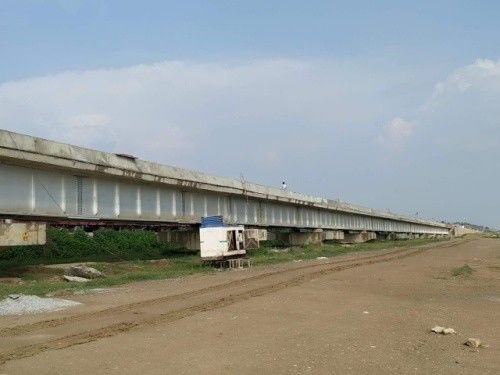
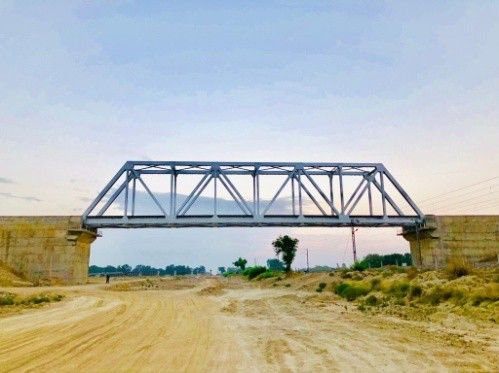
In my capacity as Project Coordinator, I held charge of Package–6B, a critical component of the overall project. This package encompassed the construction of two major engineering works of strategic significance: a 61.0 m span, DFC-loading Open Web Girder Rail-Over-Rail (ROR) Bridge traversing both Indian Railways and DFC tracks, and a 2.0 km long RCC elevated viaduct (Rail Flyover or RFO), designed to take off from the Indian Railways alignment and seamlessly connect to the main siding approach after crossing the proposed DFC lines. The package, contracted at ₹179 crore and delivered at a completion cost of ₹156 crore, was executed under my direct supervision and stewardship.
My involvement spanned the entire project cycle—beginning with the tendering stage, where I oversaw the preparation, floating, and finalization of e-tenders, followed by the award of contracts, and extending into the execution phase, where I provided continuous supervision, technical oversight, and managerial control. Both the ROR Bridge and the Viaduct—structures of considerable complexity and engineering challenge—stand completed under my charge.
Prior to this assignment, I also served as Project Coordinator for Package–1, covering the formation and bridge works within the plant premises. Commencing in November 2013 and reaching completion in August 2015, this package was delivered at a cost of ₹98.50 crore. While both packages contributed materially to the success of the project, the ROR Bridge and Viaduct remain its most prominent and technically demanding achievements, and thus merit particular emphasis.
About the ROR and Viaduct
The Rail-Over-Rail (ROR) Bridge forms a critical component of the connectivity system, traversing two principal Indian Railways lines between Meja Road and Unchdih stations on the Howrah–New Delhi trunk route at Km 781/25–27. Its 61.0 m Open Web Girder superstructure, designed to RDSO standards for 32.5t DFC loading, is supported on Rocker and Roller bearings and founded on open foundations. To achieve the requisite bearing capacity, a ground improvement system consisting of sand and granular sub-base layers was incorporated, as advised by the Geotechnical Division of RITES. The foundations and substructures employed M-35 grade concrete, ensuring both durability and performance under heavy axle loads.
The RCC Viaduct (Rail Flyover) originates from Unchdih station and gracefully spans the proposed two tracks of the Dedicated Freight Corridor before merging with the main approach to the Meja Thermal Power Project siding. The foundation system comprises 1,200 mm bored cast-in-situ piles, with steel composite girders adopted in the superstructure. The viaduct comprises 78 spans, including 58 straight spans (24.4 m RDSO standard girders for DFC loading) and a curved segment of 20 spans specially designed by the Rail Civil Engineering Design (RCED) wing of RITES. This curved portion includes five spans of 12.2 m and fifteen spans of 24.4 m, supported on POT-PTFE bearings.
The structure reflects careful gradation of concrete for performance optimization: M-35 for piles and most pile caps, M-40 for selected pile caps, M-45 for pedestals, and M-30/ M-40 for deck slabs depending on the span type. Load testing of two spans, executed as per IRC SP-51, yielded satisfactory results, affirming the robustness of the design and construction.
The ROR and Viaduct package, awarded at a value of ₹179.50 crore to M/s M.G. Contractors Pvt. Ltd. (executed as MGCPL–ATEPL JV), was brought to completion in January 2020 at a cost of ₹156 crore, and subsequently handed over for track linking. Financial closure of the package is presently underway.
A notable hallmark of this project was the large-scale fabrication of structural steel, including components of the ROR and the composite girders of the viaduct.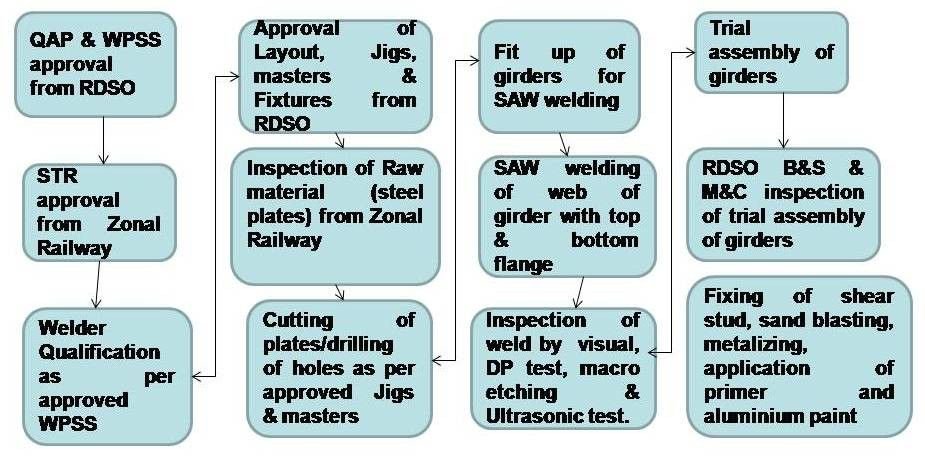 To meet stringent RDSO Technical Requirements, a dedicated fabrication workshop was established at site, duly inspected and approved by RDSO. All structural steel testing adhered to IRS: B1 standards, with confirmatory testing as per IS:2062 conducted through NTH Ghaziabad, NTH Kolkata, and RITES Kolkata. Only SAIL and Jindal steel plates, angles, and channels were utilized, ensuring adherence to the highest benchmarks of quality.
Construction Methodologies & Engineering Innovations
Launching of the Open Web Girder (ROR Bridge)
The erection and launching of the 61.0 m Open Web Girder (OWG) for the ROR Bridge was executed through a meticulously engineered skidding arrangement, employing PTFE sheets laid over rails placed atop a temporarily erected cement concrete (CC) crib structure. The alignment of the crib supports, together with the precise positioning of NP beams over them, was subjected to minute verification and on-site checks to ensure flawless geometry and structural stability.
Two CC cribs in close proximity to the Indian Railways track were erected under a carefully orchestrated power block. In anticipation of potential challenges, a full-scale mock drill for crib erection was carried out at site—an exercise that provided critical insights, allowing constraints to be identified and mitigated well before the actual block period.
During the sanctioned two-hour power block, the skidding of the OWG across the Indian Railways alignment was accomplished in an astonishing 40 minutes, a feat of engineering efficiency and precision. The operation not only showcased the technical ingenuity and rigorous planning underpinning the project but also set a benchmark for safe, swift, and controlled girder launching. The adjoining photograph captures the skidding of the OWG in progress, epitomizing the harmony of design, preparation, and execution.
Ground Improvement for Open Foundations (ROR Bridge)
Given the bearing capacity requirements at founding levels, a ground improvement regime was adopted, consisting of sand layers and granular sub-base (GSB) placement. This methodology, recommended by the Geotechnical Division of RITES, ensured both structural stability and long-term performance of the open foundations. The works exemplify the integration of geotechnical expertise with structural design imperatives, delivering a foundation system of both economy and robustness.
Fabrication of Structural Steel (ROR & Viaduct)
The project demanded large-scale fabrication of structural steel, including OWG components and steel composite girders for the viaduct. To achieve the exacting standards of RDSO’s Schedule of Technical Requirements (STR), a dedicated fabrication workshop was established at site. The facility was formally inspected and approved by RDSO, and all steel testing protocols were strictly adhered to. Tests as per IRS: B1 and confirmatory testing under IS:2062 were conducted through NTH Ghaziabad, NTH Kolkata, and RITES Kolkata. With raw materials procured exclusively from SAIL and Jindal, the fabrication process embodied both technical precision and stringent quality assurance.
Load Testing of Viaduct Spans
Two spans of the viaduct were subjected to full-scale load testing in accordance with IRC SP-51 provisions. The tests were conducted with precision instrumentation and monitoring, and results were found entirely satisfactory, reaffirming the design integrity and construction quality of the structure. Such systematic validation reflects the methodical rigor applied throughout the project lifecycle.
Utilisation of Excavated Rock for Ballast Production
During the execution of Package–1 works, extensive rock excavation became indispensable for formation cutting. Perceiving this as an opportunity rather than a constraint, it was resolved—guided by the principles of sound engineering practice, resource optimisation, and fiscal prudence—to repurpose the excavated boulders for the manufacture of track ballast essential to the project.
To enshrine this innovation within the project framework, provisions for crushers and allied installations were embedded at the tendering stage itself, thereby ensuring the smooth integration of ballast production into the construction programme. After rigorous technical evaluation, the scheme was accorded approval by the Chief Track Engineer, North Central Railway, with requisite relaxations formally sanctioned for its adoption.
The approach not only ensured a steady supply of high-quality ballast in close proximity to the works, but also yielded significant economic dividends. The resultant savings—approximately ₹25 crore—stand as a compelling vindication of ingenious material re-utilisation, strategic foresight, and exemplary project stewardship.
Shifting of DFC Alignment Owing to Non-Detour
In the formative stages of project planning (circa 2011), a surface-level connection was envisaged for accommodating loaded coal rakes from the Mughalsarai end. At that time, the Dedicated Freight Corridor (DFC) authorities had indicated their willingness to detour their alignment nearly one kilometre southwards, thereby permitting the construction of the siding line at grade.
However, by the Detailed Project Report (DPR) stage, the DFC reconsidered and ultimately rescinded its detour proposal. This development necessitated a renewed strategy. Through sustained dialogue and the high-level intervention of RITES and Railway Board officials, the DFC was persuaded to shift its alignment by at least 25 metres from the Indian Railways track, thereby creating a slender engineering window to provide a graded connection flying over the proposed DFC tracks.
This adjustment, while resolving the alignment deadlock, perforce required the adoption of an elevated viaduct, with non-standard spans specially designed for the crossing. The solution, though more complex and cost-intensive, represented a masterstroke of negotiation, design adaptation, and project governance. It epitomised the manner in which institutional coordination and engineering flexibility can converge to overcome seemingly intractable constraints in railway infrastructure.
Approval of GAD for the ROR Bridge by DFC
The Rail-Over-Rail (ROR) Bridge, designed to cross both the existing Indian Railways tracks and the proposed Dedicated Freight Corridor (DFC) lines, demanded rigorous vetting of its General Arrangement Drawing (GAD). The initial submission to DFC met with rejection, as the foundation of one abutment intruded into the DFC boundary, necessitating an increased abutment spacing which, in turn, would have altered the designated 61.0 m span length.
The matter was escalated to the Rail Civil Engineering Design (RCED) wing of RITES for resolution. It was at this juncture that I proposed a design refinement: by configuring the abutment in a trapezoidal form at the pedestal location, the foundation could be shifted outside the DFC boundary while retaining the standard span length. The solution not only preserved the design integrity of the bridge but also harmonised the structure with boundary conditions imposed by DFC.
The suggestion was accepted by RCED, the GAD was duly revised, and after this refinement, the DFC accorded final approval. This episode stands as a compelling instance of how innovative engineering insight, coupled with persuasive technical reasoning, can resolve institutional impasses and safeguard the timely progression of a project of national importance.
Approval of GAD and Launching Scheme of ROR by NCR
Following the endorsement of the General Arrangement Drawing (GAD) by the DFC, the proposal was duly submitted to North Central Railway (NCR) for final approval. The process was far from perfunctory, requiring concurrence from multiple disciplines at both the Divisional and Headquarters levels—including Engineering, Signal & Telecommunication, and Traction.
The onus of coordination across this institutional spectrum rested singularly upon me. Through sustained engagement, frequent consultations, and immediate resolution of queries, I ensured that the matter advanced through the labyrinth of departmental scrutiny. The approval, however, demanded considerable time, given the interdepartmental interfaces involved.
To avert delays in construction commencement, I undertook a proactive initiative: persuading NCR authorities to organise a site inspection by the Chief Bridge Engineer. Upon personally reviewing site conditions, he was convinced of the project’s soundness and consented to authorise the initiation of construction activities even as the formal GAD approval process was still underway.
This episode underscores not merely the technical intricacies of ROR bridge approval and launching schemes, but also the indispensable role of negotiation, persistence, and strategic engagement with railway authorities in advancing a project of such magnitude. It exemplifies how timely intervention and institutional persuasion can convert procedural bottlenecks into pathways for progress.
CRS Sanction of the ROR Bridge
The sanction of the Commissioner of Railway Safety (CRS) is an indispensable prerequisite for works involving operational interfaces with Indian Railways. The process is traditionally protracted and exacting, often entailing multiple submissions, inspections, and iterative clarifications.
In the case of the ROR Bridge, recognising the potential for delay, I undertook a more direct and proactive course of action. A personal audience with the CRS was arranged, wherein I presented the technical case with clarity, supported by complete documentation and engineering justification. Leveraging both professional credibility and established personal rapport, I was able to secure the sanction in an expeditious manner, thus averting delays that might otherwise have encumbered the project.
This accomplishment reflects not only the diligence and persistence demanded by statutory approvals, but also the value of cultivated professional networks, decisive initiative, and persuasive technical engagement in accelerating outcomes of critical importance.
Arranging Speed Restrictions and Traffic-cum-Power Block
The launching of the Rail-Over-Rail (ROR) Bridge necessitated the imposition of speed restrictions (SR) and the securing of a traffic-cum-power block—a process invariably fraught with operational sensitivities given the heavy train density on the Howrah–New Delhi trunk route.
To this end, I undertook vigorous and sustained persuasion with Railway authorities at both the Divisional and Sectional levels, meticulously presenting the engineering rationale, safety imperatives, and operational safeguards. Through persistent dialogue and close liaison, the requisite approvals were finally accorded, enabling the block arrangements essential for girder launching.
This endeavour exemplifies the critical interplay of engineering urgency and operational diplomacy, where strategic engagement with railway officials proved decisive in reconciling safety, traffic imperatives, and construction priorities.
Resolving Parallel Working Constraints between Viaduct and DFC Line
The construction of the 2.0 km viaduct presented an acute logistical challenge, as its alignment was positioned 16 metres from the existing Indian Railways line and a mere 9 metres from the Dedicated Freight Corridor (DFC). Such proximity rendered it untenable for both works to progress in parallel, creating recurrent points of contention with DFC authorities.
Objections were repeatedly raised by DFC, resulting in interruptions and stoppages of viaduct construction. To resolve this impasse, I convened a series of coordination meetings with DFC officials, their PMC consultants, and the executing agency, wherein the strategic significance of the viaduct was emphatically conveyed. I underscored its indispensability for the coal connectivity of the forthcoming Meja Thermal Power Plant, arguing that deferment of DFC’s activities over the short stretch was essential to safeguard project timelines of national importance.
Through persistent persuasion and diplomatic negotiation, the DFC was ultimately convinced to reschedule its works in the affected expanse, thereby granting priority to the completion of the viaduct. This outcome not only enabled uninterrupted progress of a critical structure but also demonstrated how technical reasoning, institutional diplomacy, and project prioritisation can converge to resolve seemingly irreconcilable construction conflicts.
Addressing Infringement of Graveyard and Mosque in Viaduct Alignment
The construction of the viaduct presented challenges that transcended mere engineering, touching instead upon the delicate sphere of socio-cultural sentiment. The proposed alignment intersected both a graveyard and an existing mosque, each a locus of profound religious significance to the local community. The complexity was heightened by the fact that one of the piers was to be founded directly upon a grave, rendering execution impossible without prior reconciliation with community concerns.
Fully cognisant of the sensitivities involved, I undertook several rounds of dialogue with the villagers, marked by patience, respect, and attentiveness to their apprehensions. Through sustained persuasion and consensus-building, the residents ultimately consented to the works, contingent upon reciprocal measures to safeguard their sentiments. Their requests for a boundary wall, a pathway, and the construction of a temple were formally acceded to, and MUNPL was successfully convinced to underwrite the costs, thereby enshrining respect for local traditions within the project’s framework.
The mosque, which infringed not only the viaduct alignment but also that of the Dedicated Freight Corridor (DFC), was addressed through a coordinated institutional response. It was carefully dismantled only after the construction of a replacement mosque at an alternative site, executed by DFC to the satisfaction of the community, thereby ensuring continuity of religious observance without disruption.
This episode stands as a paradigm of how engineering imperatives must often be harmonised with cultural realities. It underscores the indispensable importance of community engagement, cultural sensitivity, and institutional negotiation in large-scale infrastructure works. By integrating technical integrity with social responsibility, the viaduct project advanced without discord, preserving both structural soundness and communal harmony.